


News
▲
Top 5 Factors to Consider When Evaluating Steel Structure Quality for Procurement
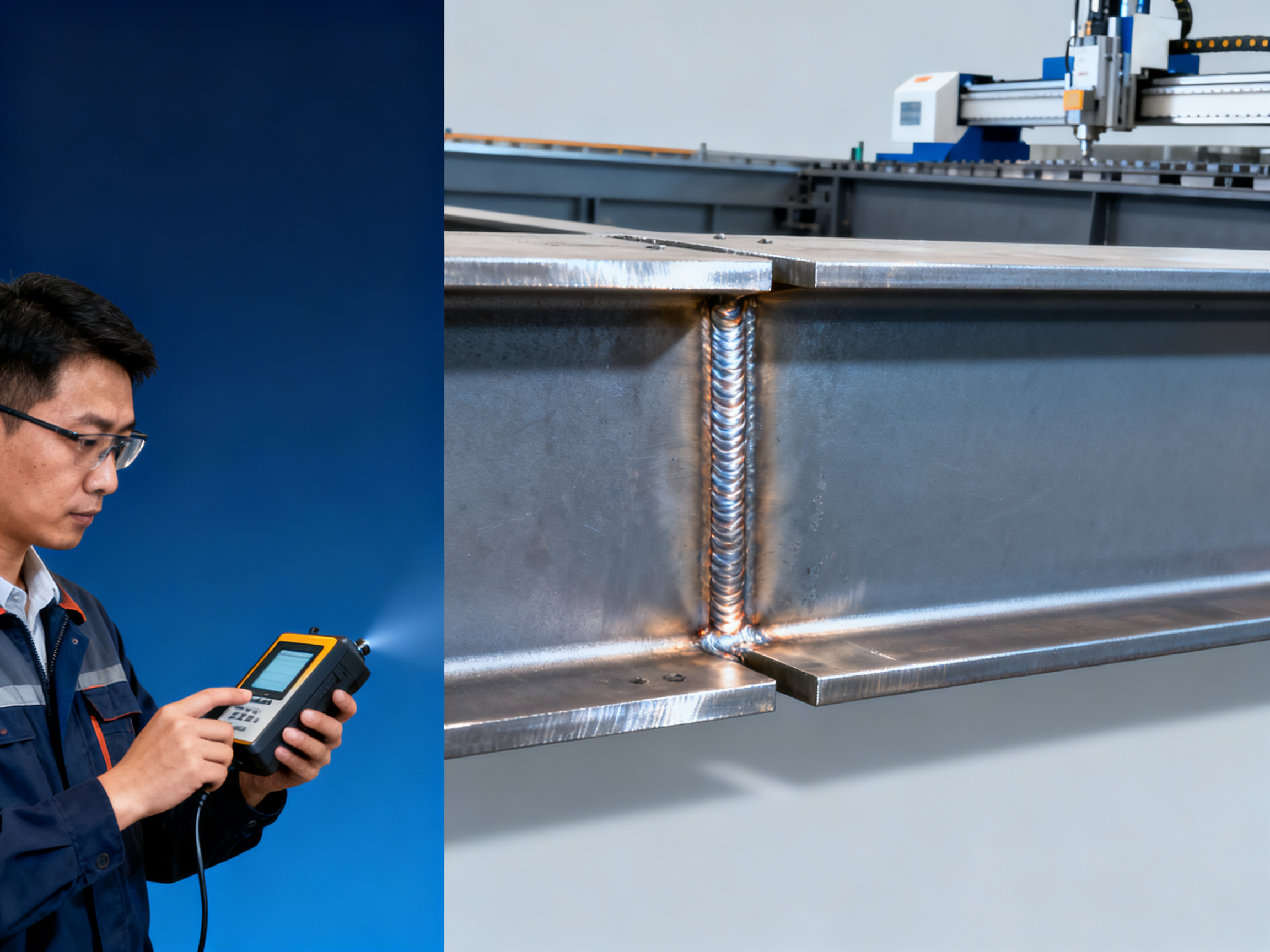
When procuring steel structures for your construction projects, quality evaluation is paramount. As industry professionals with over 20 years of expertise, YG Steel Structure highlights five critical factors that technical evaluators, procurement specialists, and decision-makers must assess: material specifications, fabrication precision, corrosion protection, structural integrity, and compliance certifications. These elements directly impact project safety, longevity, and cost-efficiency in industrial facilities, public buildings, and residential complexes.
1. Material Specifications: The Foundation of Structural Performance
Steel grade selection determines load-bearing capacity and durability. ASTM A572 Grade 50 or equivalent high-strength low-alloy (HSLA) steels are recommended for critical applications like Steel Structure for Drilling Platform where yield strength exceeding 345 MPa is essential. Technical evaluators should verify mill test certificates (MTCs) confirming chemical composition and mechanical properties. For seismic zones, ensure the material meets EN 10025 or GB/T 1591 standards with proper Charpy V-notch impact test results at specified temperatures. Procurement teams must cross-check thickness tolerances against ASTM A6/A6M tolerances - deviations beyond ±0.3mm for plates under 20mm thickness can compromise welding quality.
2. Fabrication Precision: Beyond Basic Dimensional Checks
Modern CNC-controlled production lines like those at YG Steel Structure's 100,000㎡ facility achieve ±1mm accuracy on beam lengths up to 18 meters. Critical parameters include: camber tolerances (≤L/1000 but not exceeding 25mm), bolt hole patterns (±1.5mm center-to-center), and squareness of end cuts (≤1° deviation). For complex connections in industrial facilities, 3D laser scanning verification against BIM models is becoming industry best practice. Our Class A Steel Structure Design Certification ensures all components meet AWS D1.1/D1.5 welding standards with 100% UT/RT testing for critical joints.
3. Corrosion Protection Systems: Longevity Calculations
The ISO 12944 standard categorizes corrosion environments from C1 (very low risk) to C5-M (marine splash zones). For coastal municipal bridges, a C5-rated system combining hot-dip galvanizing (minimum 85μm zinc coating) with epoxy-polyurethane topcoats delivers 25+ years protection. Technical specifications should mandate: surface preparation to Sa 2½ (ISO 8501-1), DFT measurements (150-200μm for primer), and holiday detection testing at 15kV. YG Steel Structure's automated shot blasting and painting lines ensure consistent coverage, including hard-to-reach areas in complex structural components.
4. Structural Integrity Verification: Beyond Design Drawings
Third-party finite element analysis (FEA) validation is recommended for structures exceeding 30m spans or subjected to dynamic loads. Key evaluation points include: connection moment capacity (≥1.2 × calculated demand), lateral torsional buckling resistance, and fatigue life calculations per EN 1993-1-9. Our engineering team conducts full-scale load testing on prototype assemblies, simulating 150% of design loads for critical applications like power plant structures. Digital twin technology now enables real-time monitoring of stress distribution during fabrication.
5. Compliance Certifications: Your Legal Safeguard
China's Class I Construction Qualification requires annual audits of: welding procedure qualifications (WPS/PQR), NDT personnel certifications (ISO 9712), and traceability systems. Internationally, look for CE marking (EN 1090-1 EXC3), AISC certification for US projects, or JIS accreditation for Japanese specifications. YG Steel Structure maintains active membership in China Steel Construction Society, with all production processes audited against GB 50205-2020 quality standards. Procurement contracts should explicitly reference these certifications with penalty clauses for non-compliance.
Market Analysis: The Evolving Steel Construction Landscape
Global demand for prefabricated steel structures is projected to grow at 6.8% CAGR through 2030 (Grand View Research). Emerging trends include: high-strength steel alloys (S690QL) reducing material usage by 30%, modular construction techniques cutting project timelines by 40%, and smart coatings with embedded corrosion sensors. However, 68% of procurement professionals report challenges in verifying supplier quality claims (2023 McGraw-Hill Construction Survey). This underscores the need for rigorous evaluation protocols like those implemented by YG Steel Structure across our 50,000-ton annual production capacity.
Technical Comparison: Traditional vs Advanced Steel Solutions
Why Choose YG Steel Structure?
With two decades of specialized experience in steel structure engineering, our Jinan-based facility combines: 1) China's highest construction and design certifications, 2) 15+ patented connection technologies, 3) full BIM integration from design to fabrication, and 4) dedicated quality control teams conducting 23-point inspections at each production stage. For your next industrial, commercial, or infrastructure project, request our comprehensive quality assurance dossier including: material test reports, welding maps, coating inspection records, and third-party certification files. Contact our engineering team today for project-specific evaluation criteria tailored to your seismic, wind, and load requirements.
Related Posts
- ▶ How to Select the Best Steel Structure for Your Needs
- ▶ Light Steel Structures: Perfect for Fast-Track Projects
- ▶ Prefab Buildings: The Future of Sustainable Construction?
- ▶ Steel vs. Traditional Warehouses: Cost-Benefit Analysis for Procurement Teams
- ▶ Steel Structures: Meeting Client Demands with Precision
- ▶ 5 Signs You Need a High-Quality Steel Structure Supplier
Send Us A Message