


News
▲
Cost Comparison: Steel Structure Workshop vs. Traditional Concrete Building
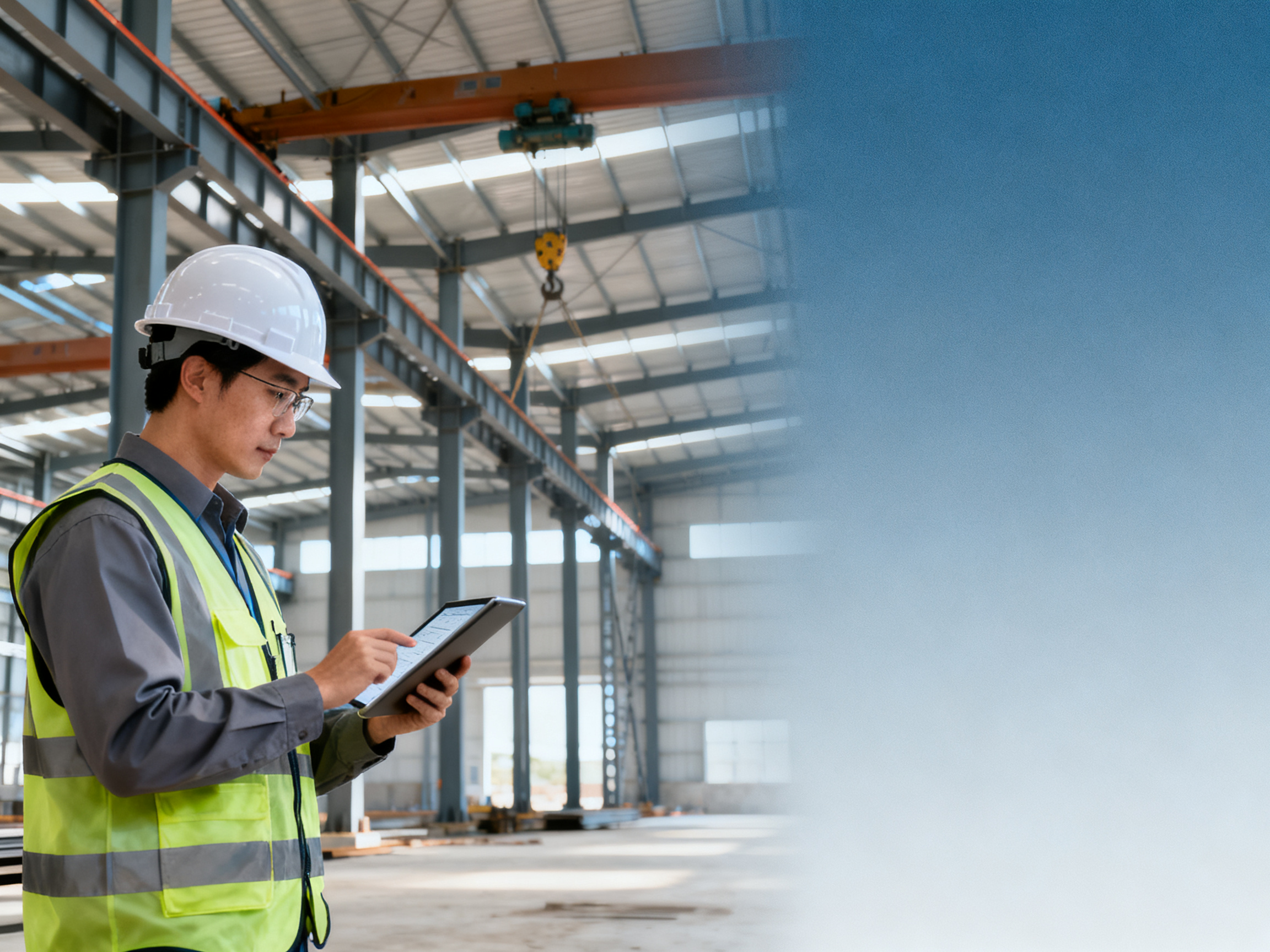
As construction demands evolve toward efficiency and sustainability, choosing between a steel structure workshop and a traditional concrete building becomes a key decision for evaluators and investors. With deep expertise in steel engineering, YG Steel Structure highlights how a modern 钢结构厂房 offers advantages in cost control, construction speed, and lifecycle performance, providing data-driven insights for technical, procurement, and business decision-makers. This discussion not only compares materials and processes but also interprets long-term operational value, enabling informed strategies for a rapidly changing global construction market.
Definition and Structural Overview
A steel structure workshop refers to a prefabricated frame composed of structural steel components such as beams, columns, and trusses, fabricated and assembled following design standards like GB50017 and ISO 9001. Unlike a traditional concrete building, which depends heavily on on-site pouring, curing, and formwork, a 钢结构厂房 integrates factory precision and modular assembly. Shandong Yuegong Steel Structure Co., Ltd. combines over two decades of specialized engineering capabilities and automated production lines to ensure dimensional accuracy and high tensile integrity for every component. This structural format facilitates wide-span layouts for industrial facilities, significantly minimizing internal obstructions while meeting seismic and wind-resistant standards. The precision of steel detailing also ensures faster approval cycles during technical review and simplifies lifecycle maintenance. In comparison, concrete structures often face shrinkage, long curing times, and limited flexibility for retrofit or expansion, making steel assemblies an increasingly attractive alternative for both domestic and international investors who prioritize lifecycle value and operational uptime.
Market Overview and Construction Trends
The global construction market is undergoing transformation driven by industrial upgrading, modularization, and green-building policies. In this landscape, the role of the 钢结构厂房 has evolved from simple warehouse use to comprehensive applications in logistics, manufacturing, public services, and municipal infrastructure. According to recent industry data, the penetration rate of steel buildings in China surpassed 45% for new industrial facilities by 2023, aligning with the “Made in China 2025” initiative that emphasizes sustainable and intelligent manufacturing. YG Steel Structure’s facility in Jinan reflects these developments with a 100,000㎡ production base that seamlessly integrates light and heavy steel fabrication lines, achieving annual output of over 50,000 tons of diversified steel components. Internationally, the demand for cost-efficient design-build solutions continues to grow across Asia-Pacific, the Middle East, and emerging African markets, where rapid industrialization demands high-speed, high-precision construction. Technical evaluators and procurement officers are increasingly attracted to steel’s recyclability and its contribution to reducing lifecycle CO₂ emissions, corresponding perfectly with corporate ESG targets. This market momentum underlines how steel construction has become synonymous with both cost-efficiency and environmental responsibility.
Comparison Analysis: Steel vs. Concrete
When comparing a 钢结构厂房 and a conventional concrete building, three primary aspects dominate the decision matrix: cost structure, construction duration, and long-term operational economics. From an initial investment perspective, steel structures usually provide about 10–15% savings in project cycle cost, primarily due to shorter construction schedules and lower labor dependency. The prefabrication process allows 70% of work to be completed in a controlled environment, resulting in enhanced quality assurance. In contrast, concrete buildings require substantial formwork, longer curing times, and weather-dependent scheduling. Considering maintenance, steel structures offer considerable lifecycle advantages. Advanced surface treatments and protective coatings ensure durability up to 50 years with minimal refurbishment, whereas concrete surfaces may require frequent crack repairs or waterproofing treatments. Structural flexibility also comes into play—steel workshops allow easy demolition, extension, or function change with minimal material loss. From a business evaluator’s standpoint, this adaptability translates directly into lower total cost of ownership and faster ROI realization. For example, an automotive parts supplier adopting YG Steel Structure’s modular workshop solution recently reduced its plant completion time by 35%, ensuring earlier production commencement and market delivery.
Technical Performance and Engineering Reliability
Steel frameworks possess outstanding mechanical characteristics: high tensile strength-to-weight ratio, ductility, and predictable elastic behavior under varying loads. YG Steel Structure utilizes precision CNC cutting and automated welding to guarantee alignment tolerance within ±1mm, meeting both GB/T1591 Q345B and ASTM A572 standards. The company’s Class A Steel Structure Design Certification confirms its ability to design complex long-span facilities such as municipal bridges and large-scale production halls. Thermal insulation, moisture control, and corrosion resistance in modern 钢结构厂房 can also be customized by integrating composite wall panels, galvalume cladding, and anti-condensing roof systems. As part of diversified product offerings, YG Steel Structure manufactures essential bridge elements such as Highway Bridge Components, ensuring consistency across civil infrastructure and industrial construction domains. By incorporating flexible design codes like EN 1993 (Eurocode 3) and China’s JGJ99, engineers can confidently model safety factors and deformation parameters, ensuring long-term stability even in high seismic zones. Such comprehensive engineering reliability supports clients who demand stringent compliance during pre-tender evaluations and structural approvals.
Cost Evaluation and Lifecycle Management
Evaluating the cost efficiency of a 钢结构厂房 extends beyond simple material comparison. It involves holistic assessment of direct, indirect, and operational expenditures over a structure’s lifecycle. Steel minimizes dead load and reduces foundation requirements, lowering total earthwork cost. The superior strength-to-weight ratio results in less transportation burden and on-site handling effort. Additionally, prefabricated modules reduce resource waste by up to 20% compared with conventional cast-in-place approaches. When calculating long-term operational costs, steel’s resilience against corrosion, pests, and material fatigue yields significant savings on periodic rehabilitation. A well-maintained building can serve efficiently for 50–70 years with steady performance, whereas concrete might demand reinforcements by mid-lifecycle. From a financial modeling perspective, project managers often identify steel structures as CAPEX-intensive at early stages but OPEX-light in the long term, achieving cost amortization faster. For decision-makers, the speed-to-market factor—often influencing revenue start dates—is a hidden but crucial component of ROI. Contracting entities partnering with YG Steel Structure benefit from integrated engineering, procurement, and construction (EPC) services that streamline logistics, procurement scheduling, and standardized quality control, further reducing unforeseen expenses linked to coordination or rework. The modular approach thus delivers predictable financial exposure and better cash-flow stability.
Procurement and Selection Guide
For procurement and technical evaluators, selecting the ideal construction system involves balancing technical performance, regulatory compliance, and cost predictability. Typical selection indicators include structural load capacity (kN/m²), fireproof rating, environmental performance of materials, and fabrication traceability. Shandong Yuegong Steel Structure Co., Ltd. integrates BIM digital model management and traceable supply-chain control, ensuring every material batch corresponds to test certificates and inspection records. Buyers can evaluate supplier capabilities via ISO 3834 welding certification, steel material sourcing transparency, and Class I Construction Qualification validations. When planning cross-industry projects—such as municipal bridges, logistics depots, or factory complexes—decision-makers may request tailored integration of specialized units like Highway Bridge Components. Domestic and overseas clients can also benefit from unified technical consulting provided by YG Steel Structure’s design engineers, ensuring optimal balance between local code compliance and cost control. Key procurement criteria include expected delivery time per ton of fabrication, factory automation ratio, and past project performance, all of which directly influence resource allocation and schedule confidence.
Case Studies and Practical Outcomes
Several benchmark projects demonstrate the practical and financial benefits of implementing 钢结构厂房 solutions. In Shandong Province, a manufacturing company specializing in precision instruments chose YG Steel Structure to construct a 12,000㎡ workshop, completed within 75 days—almost half the timeline of analogous concrete projects. The project achieved 25% energy savings annually through high-reflectivity roofing and integrated daylight design. Similarly, an international logistics client based in Southeast Asia incorporated YG’s modular steel frames for warehouse expansion; reduced downtime and material interchangeability led to immediate production continuity. The company’s industrial park clients frequently report significant logistics simplification during construction, as components arrive ready for bolted installation, lowering dependency on local heavy machinery rental. These case results corroborate the operational agility and environmental advantages that steel frameworks bring to long-term property investment. YG Steel Structure continues to refine its fabrication logistics and digital supervision to ensure every project meets ISO-based quality assurance protocols, delivering measurable value across diverse markets and climatic zones.
Trends and Future Insights
The evolution of the building materials sector signals an irreversible transition toward industrialization, digitization, and carbon neutrality. The international construction community increasingly views the 钢结构厂房 as the backbone of green manufacturing ecosystems, aided by robotic welding, 3D scanning technology, and intelligent coating systems. Digital twins are redefining predictive maintenance strategies, allowing investors to track energy performance throughout the facility’s lifespan. At the same time, policies encouraging circular economy principles stimulate reuse of steel materials, making them a core component of sustainable development initiatives. YG Steel Structure invests continuously in research partnerships to advance high-strength, low-alloy steels and explore hybrid modular systems integrating both steel and precast materials, optimizing both flexibility and sustainability. As procurement professionals and corporate strategists forecast their five- to ten-year infrastructure portfolio, adopting advanced steel frame structures aligns operational efficiency with environmental accountability, ensuring competitive advantage in both domestic and international markets.
Why Choose YG Steel Structure
With more than two decades of experience in design, manufacturing, and construction, Shandong Yuegong Steel Structure Co., Ltd. offers clients the confidence that every 钢结构厂房 adheres to rigorous engineering principles and recognized construction standards. Holding China’s Class I Construction Qualification and Class A Steel Structure Design Certification, YG Steel Structure delivers every project through an integrated process that emphasizes efficiency, safety, and environmental stewardship. Its 100,000㎡ facility combines modern equipment, professional talent, and strict quality management to meet diverse demands across industrial, municipal, and residential sectors. For technical evaluators and business analysts seeking a proven partner capable of delivering high-value steel building solutions, YG stands ready with comprehensive support—from conceptual design to post-completion maintenance consulting. To learn more about structural components or discuss specific project requirements, stakeholders are encouraged to contact YG Steel Structure’s engineering team for a tailored consultation—transforming visionary designs into sustainable realities.
Related Posts
- ▶ How to Select the Best Steel Structure for Your Needs
- ▶ Light Steel Structures: Perfect for Fast-Track Projects
- ▶ Prefab Buildings: The Future of Sustainable Construction?
- ▶ Steel vs. Traditional Warehouses: Cost-Benefit Analysis for Procurement Teams
- ▶ Steel Structures: Meeting Client Demands with Precision
- ▶ 5 Signs You Need a High-Quality Steel Structure Supplier
Send Us A Message