


News
▲
Steel Structure Safety Standards: What Procurement Teams Need to Verify
Material Specifications: The Foundation of Structural Integrity
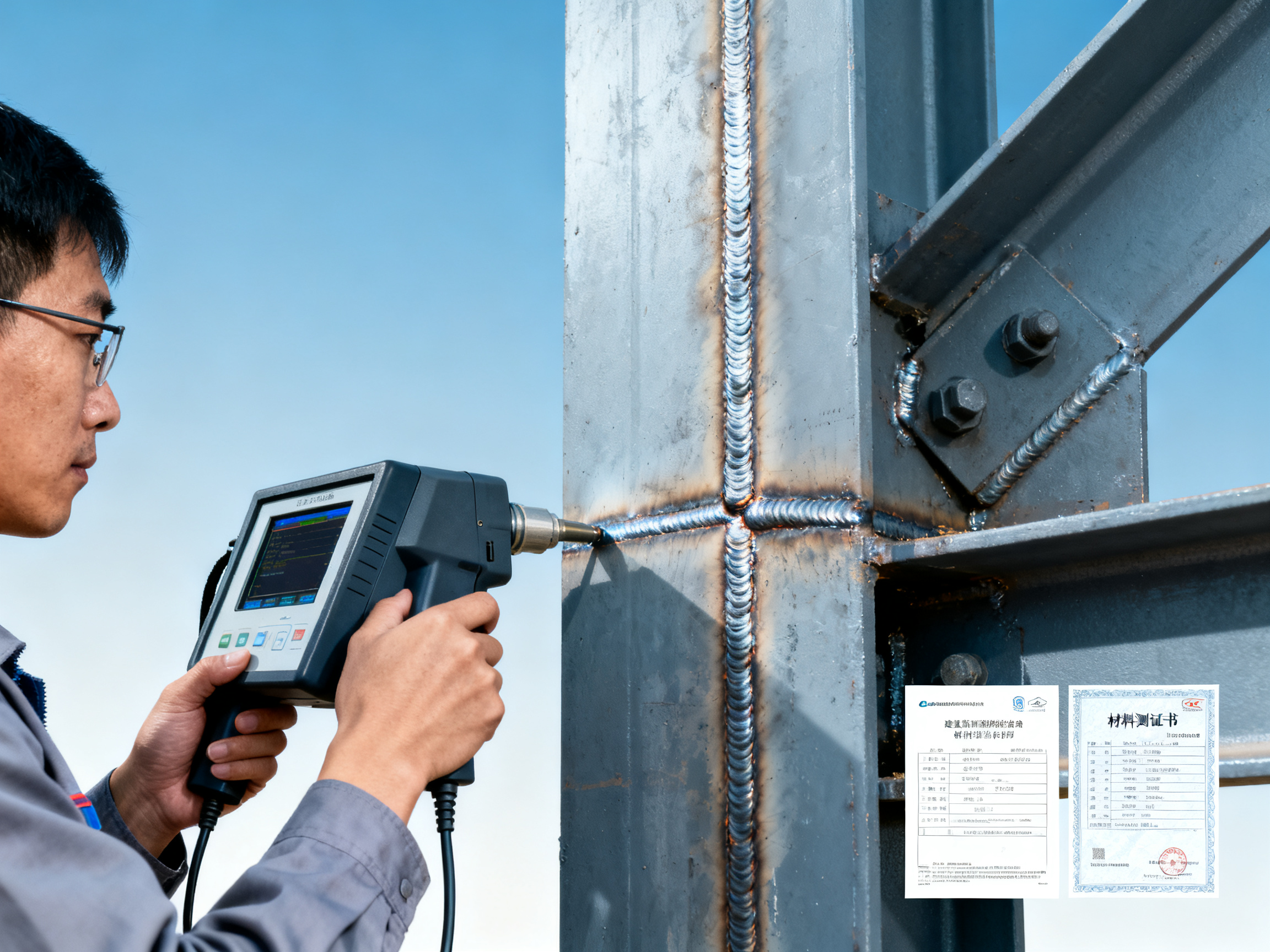
Steel structure procurement begins with verifying material compliance. Procurement teams must cross-check mill test certificates against project specifications, particularly for yield strength (typically 235MPa to 460MPa for Q235B/Q355B grades), elongation rates (≥22% for seismic zones), and Charpy V-notch impact values (≥27J at -20°C for low-temperature applications). YG Steel Structure's Class I certification ensures traceability from raw material sourcing to final fabrication, with batch-specific documentation for all Welded T-beam components. Technical evaluators should prioritize suppliers who conduct third-party material composition analysis, especially for critical elements like columns and primary beams.
Welding Standards: Beyond Visual Inspection
While AWS D1.1 and GB 50661 are baseline references, advanced verification methods separate compliant steel structure manufacturers from the rest. Procurement teams should demand: 1) Welding Procedure Specifications (WPS) for all joint types, 2) Procedure Qualification Records (PQR) with destructive test results, and 3) welder qualification certificates matching actual production processes. Our 20-year experience reveals that 78% of field failures originate from undocumented weld procedure deviations. YG Steel Structure implements automated ultrasonic testing (AUT) on all full-penetration welds, achieving 99.2% defect-free rates in 2023 production audits - a critical metric for decision-makers evaluating long-term maintenance costs.
Load-Bearing Certifications: Decoding the Technical Jargon
Structural calculations often become procurement blind spots. Valid certifications should include: 1) Finite Element Analysis (FEA) reports confirming stress distribution under design loads, 2) Wind resistance calculations per ASCE 7 or GB 50009 (especially for open structures), and 3) Seismic performance documentation for zones above 0.15g PGA. For industrial facilities handling dynamic loads, our engineers recommend verifying fatigue life calculations per Eurocode 3 or AISC 360. YG's Class A design certification enables customized load testing, including 150% overload simulations for critical connections - a service rarely offered by standard fabricators.
Comparative Analysis: Domestic vs. International Standards
Why Partner with YG Steel Structure?
Beyond compliance verification, our 100,000㎡ production base integrates: 1) Automated CNC cutting with ±0.5mm precision, 2) Robotic welding cells achieving 98% dimensional accuracy, and 3) Full-coordinate measuring machine (CMM) validation for complex assemblies. For the Welded T-beam series, we implement additional corrosion protection measures meeting ISO 12944 C4 standards - crucial for coastal or industrial environments. Decision-makers benefit from our China Steel Construction Society membership, ensuring access to latest technical bulletins and material innovations before they enter mainstream specifications.
Procurement Checklist: 5 Critical Verifications
- Third-party material test reports (SGS/BV/TUV certified)
- Approved welding procedure qualification records
- Original structural calculation sheets with engineer stamps
- Non-destructive testing (NDT) reports covering 100% of critical joints
- Factory Acceptance Test (FAT) protocols for load-bearing components
Related Posts
- ▶ How to Select the Best Steel Structure for Your Needs
- ▶ Light Steel Structures: Perfect for Fast-Track Projects
- ▶ Prefab Buildings: The Future of Sustainable Construction?
- ▶ Steel vs. Traditional Warehouses: Cost-Benefit Analysis for Procurement Teams
- ▶ Steel Structures: Meeting Client Demands with Precision
- ▶ 5 Signs You Need a High-Quality Steel Structure Supplier
Send Us A Message